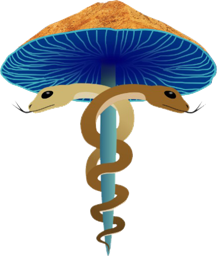
A new study suggests that psilocybin prolongs the life of human cells and improves health in older mice, ushering in a new era in anti-aging research.
The fountain of youth could be found in psychedelic mushrooms.
What if the key to slowing down aging and living better wasn’t in a cream, a miracle pill, or a scalpel… but in a mushroom? A new study published in npj Aging has revealed that psilocybin, the compound found in the well-known “magic mushrooms,” can extend the life of human cells by more than 50%. Yes, you read that right.
The discovery not only confirms that we are in the midst of a scientific psychedelic renaissance, but also points to a future where these substances could go beyond mental health: they could help us age better.
From the brain to the cells: what no one expected from psilocybin
Until now, psilocybin was mainly studied for its effects on the brain: relief from depression, anxiety, PTSD, addictions… More than 150 clinical trials support its potential in this area. But its impact on the rest of the human body was virtually unknown.
That changed with the team led by Dr. Louise Hecker of Baylor College of Medicine (formerly at Emory University), who decided to look beyond the brain. They used cell models to see what happened when human tissue—such as skin and lung cells—was exposed to psilocin, the active compound generated in the body when psilocybin is metabolized.
The result? The cells lived more than 50% longer than untreated cells.
How does this cellular “elixir” work?
According to the researchers, psilocybin appears to influence several processes related to aging:
It reduces oxidative stress (one of the main causes of cellular deterioration).
It improves DNA repair capacity.
It helps preserve the length of telomeres, those small structures that protect our chromosomes and whose degradation is linked to aging, cancer, and heart disease.
In other words, psilocybin does not prevent cells from aging, but it does help them age more slowly and more healthily.

Longer-lived, better-looking mice
To see if these effects were also reflected in whole organisms, the team tested mice equivalent to 60- to 65-year-old humans. Those that received psilocybin lived longer and showed visible signs of better health, such as less gray hair and increased hair growth.
“The idea was: what if we could intervene late in life and still improve the quality of that stage?” explained Hecker. “And the results suggest that yes, it is possible.”
A psychedelic molecule turned into an anti-aging therapy?
The scientific community is beginning to seriously consider the idea that psilocybin could be more than a psychedelic: a multi-target molecule that acts in the body as an aging modulator.
However, we are still a long way from seeing it in pharmacies as an anti-aging treatment. Oncologist Dr. Jack Jacoub, consulted by Medical News Today, points out that while the study is fascinating, there are still many steps to confirm these effects in humans.
“Aging is a very broad umbrella,” he says. “We would have to see if it helps, for example, to recover faster after a heart attack or stroke. If it speeds up healing, if it protects cells. All of that requires much more research.”
What this study reminds us: the body and mind are not separate
The importance of this finding goes beyond longevity. It reminds us of something essential: what impacts the mind impacts the body. And vice versa. Psilocybin not only changes the way we think or feel: it could also change how we age.
So, although we cannot yet talk about a “fountain of youth pill,” this study opens a new door for anti-aging medicine, one that until recently had not even been considered.
Conclusion: it’s not magic, it’s science. And we’re just getting started
Psilocybin—that natural compound that was persecuted and stigmatized for decades—could end up being one of the most powerful allies for living longer and better.
We are only at the beginning of this story, and there is still much to investigate: dosage, frequency, long-term effects, interactions with other diseases… But the message is clear: psilocybin has much broader effects than we thought.
Perhaps the future of medicine lies not only in ultra-sophisticated laboratories, but also in the biological wisdom of fungi, waiting to be understood and applied responsibly.
If you are interested in these debates on the responsible use of sacred plants, cultural justice, and ethical forms of spiritual seeking, don’t miss Fuertedélica 2025. It will be a space to share knowledge, question narratives, and build bridges between worlds. Buy your ticket now and be part of this transformative experience.

Raúl del Pino is a prominent psychonaut, writer, and authority on psychoactive substances, particularly psychedelics.
He founded www.psiconautica.org in 1996, the first Spanish-language website dedicated to drugs, focusing on Altered States of Consciousness and Transpersonal Psychology. He is the author of the books Contemporary Guide to the Psychedelic Journey and MDMA, Sex, and Tantra. Raúl combines scientific rigor with personal introspection, exploring the relationship between psychoactives, sexuality, and spiritual practices. His work makes a significant contribution to the understanding and responsible use of psychoactive substances.