
In Madrid and on the coast of Malaga, two distinct scenes have shaped, barely a week apart, the outline of a unique historical moment for psychedelics in Spain. On the one hand, Psymposium, three days of science, clinical practice, and community at the Official College of Physicians of Madrid. On the other, Nexus 2025, a living laboratory of creativity, lucidity, and smiles facing the Mediterranean. And, on the horizon, just two weeks away, the Canary Islands invite us to the next chapter: Fuertedélica, an international gathering designed to bring together health professionals, artists, and activists around “the varieties of the psychedelic experience.”
Psychedelics in the house of medicine
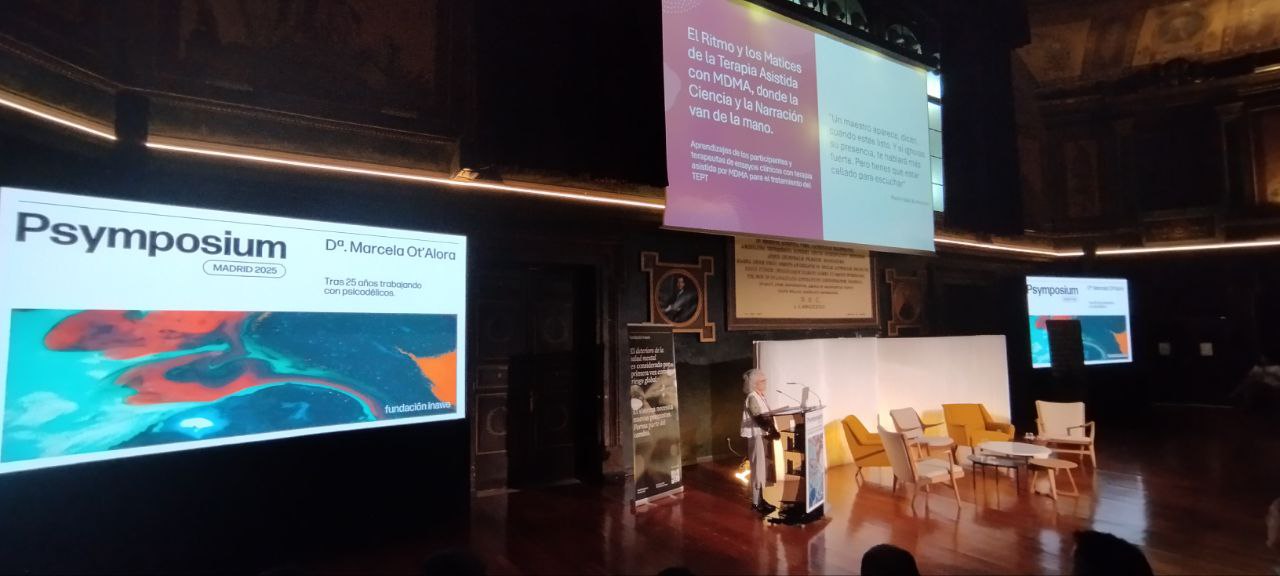
Between October 2 and 4, Psymposium 2025 brought together several hundred attendees—in person and via streaming—in a forum organized by the Inawe Foundation with a clear purpose: to bring scientific evidence and mature ethical debate to professionals and citizens in a European context where regulatory changes are accelerating inexorably. The event took place at the Official College of Physicians of Madrid, a historic building that, for a few days, became the epicenter of an unprecedented conversation between science, clinical practice, and civil society.
The program combined empirical, neuroscientific, and ethical reflection sessions. Antón Gómez-Escolar opened the conference with a visual journey through the history of the psychedelic renaissance, from ancestral rituals to contemporary clinical trials. Genís Oña, from Rovira i Virgili University, reviewed the roots of psychedelic research in Spain—from the pioneers to the new generations of researchers—and presented the latest findings in the field.
For his part, José Carlos Bouso, Scientific Director at ICEERS, offered an overview of fifteen years of studies on psychoactive plants, from ayahuasca trials to public health and restorative justice projects. Subsequently, clinical results with psilocybin and DMT in the treatment of resistant depression were presented, as well as the first clinical trial with ibogaine in Spain. Researchers such as David Erritzøe (Imperial College London) and Tomáš Páleníček (National Institute of Mental Health of the Czech Republic) provided data on neuroimaging, brain connectivity, and synaptic plasticity that confirm the therapeutic potential of psychedelics. On the national level, Tre Borràs, Rosa María Dueñas, and Irene de Caso shared pioneering experiences in mental health and clinical pharmacology, while Marc Aixalà focused on a fundamental aspect: therapeutic integration as a central phase of the process, where science meets humanity.
On a more experiential and human level, clinical psychologist Débora González presented her work on ayahuasca-assisted psychotherapy in dealing with grief, advocating emotional integration and the reconstruction of meaning as the cornerstones of the therapeutic process. For her part, Inés Erkizia, a pharmacologist at the University of the Basque Country, addressed preclinical advances with psilocybin and its neurobiological mechanisms, showing how its effects on synaptic plasticity and the default network could explain its antidepressant impact.
In addition, the conference was attended by other prominent researchers such as Liliana Galindo (Cambridge Psychedelic Research Group); Magí Farré, an expert in clinical pharmacology of MDMA; Chris Timmermann (University College London), one of the leading figures in psychedelic neuroscience; Jerónimo Mazarrasa, who addressed regulatory and implementation challenges; Óscar Soto Angona, who analyzed the theoretical foundations of assisted therapy; and Sorcha O’Connor, who presented the “PsilOCD” study; and testimonials from patients who shared their personal experiences with psychedelics. With this international and diverse lineup, the conference consolidated its interdisciplinary nature and its commitment to opening new paths in mental health, neuroscience, and culture.
The discussions did not shy away from the dilemmas. There was talk of the tension between evidence and regulation, the costs of access, the need to train qualified professionals, and the urgency of establishing ethical protocols. At the round table on “Therapeutic Horizons and Frontiers,” several speakers insisted that efficacy cannot be separated from support, and that psychedelic-assisted therapy requires a framework of care, presence, and responsibility.
Beyond the data, the gesture was a goal scored in the institutional arena: the debate on psychedelics entered the realm of medicine with technical language, methodological rigor, and a high degree of sensitivity. For three days, the old hall of the College of Physicians became a place of listening: where silence and taboo once reigned, clinical, experiential, and scientific voices resonated, calmly calling for a future where therapeutic innovation goes hand in hand with care, ethics, and responsibility.
From the laboratory to the beach
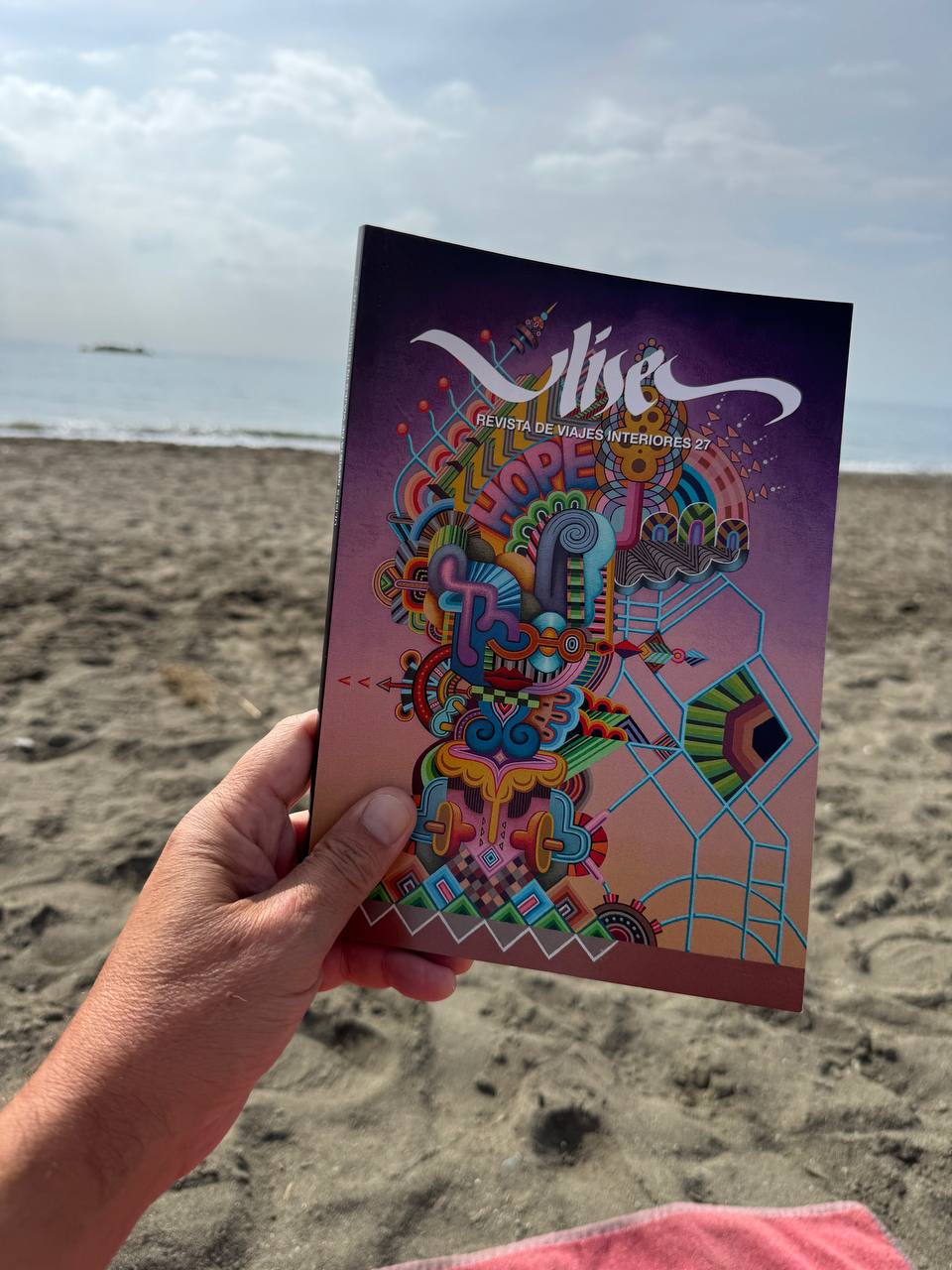
A week later, from October 10 to 12, the focus shifted to the Mediterranean. In Rincón de la Victoria, the Universo Ulises association held Nexus 2025, a unique event that moved the debate from the medical consultation to the realm of creation, the body, and collective experience. Against the backdrop of the sound of the sea, the event brought together artists, thinkers, and therapists in a format that oscillated between conference and celebration.
In the days leading up to the event, the third floor of the Proteo bookstore in Malaga hosted two presentations that served as an intellectual prologue to the gathering. On Wednesday, October 8, José Carlos Bouso presented Medicina psiquedélica (Psychedelic Medicine, Kairós, 2025), a work that combines scientific rigor and humanistic sensitivity to explore the therapeutic uses of psychedelics and the dilemmas posed by their clinical and social integration. The following day, historian Juan Carlos Usó presented Historia del ocio nocturno en España (History of Nightlife in Spain, El Desvelo, 2025), an exhaustive journey through the cultural evolution of Spanish nights, where music, politics, and substances intertwine in the construction of modernity. Both events, held in an atmosphere of close dialogue and critical reflection, anticipated the pluralistic and expansive tone that would mark the spirit of Nexus 2025.
Journalist Héctor Márquez opened the conference at the Liceo Playa restaurant, setting the tone of sensory openness and scathing curiosity that would define the event, with Miguel Castejón as master of ceremonies. This was followed by the presentation of Ulises magazine by Jonás Sánchez and Jesús García, a symbol of continuity between countercultural thinking and contemporary exploration. Subsequently, historian Juan Carlos Usó outlined a lucid cartography of Andalusian psychedelia, with Torremolinos as the hub of the night during the Franco regime: a liminal space where tourism, music, sexual dissent, and sensory experimentation wove a culture of freedom buried under the morality of the dictatorship. His perspective, halfway between chronicle and cultural archaeology, positioned the Malaga coast as the symbolic starting point of Spanish counterculture.
Poet Antonio Orihuela, one of the most recognized voices in contemporary critical poetry, closed the first day with a reading that intertwined mysticism, denunciation, and humor, turning the verb into an altered state of consciousness. On Saturday, the question of art and delirium was addressed by creators such as Elif and Celia Emily Casey, who proposed art as a space for exploration, an attempt to restore spiritual density to the creative act. On video, Raimundo Viejo completed the mosaic with a dissertation on expanded cinema and psychedelic cinema.
Saturday’s round tables offered a journey through history, care, and experimentation. In “From Torremolinos to Burning Man,” Antonio Orihuela, Juan Ramón Cuadros, and Luis Otero linked Andalusia’s psychedelic memory with global movements from the 1970s to the present. Cuadros recounted his own discovery of psychedelics and Otero recalled his beginnings as a pioneer in the sale of visionary plants in Spain, while Orihuela wove a poetic bridge between counterculture and resistance. The panel “Healing Together” brought together Aura Roig, Tre Borràs, and Missa Mejías, who shared specific experiences of accompaniment and care networks in different contexts and communities: Aura spoke about the work of Metzineres in Barcelona, Tre about the comprehensive community health project he promoted in Reus, and Missa about the PsyCare project at the La Seta Crítica psychedelic gathering. Finally, “Expansive Codes: 21st Century Psychotechnologies,” with Israel Sales, Igor Domsac, Juan de la Vida, and Ana Elda Maqueda: Israel presented the new phase of Ulises magazine; Igor crossed theatre, words, music, blockchain, fatherhood and permaculture; Juan spoke about his experience initiating numerous people into the ritual use of DMT; and Ana shared an exhibition on the traditional uses of Salvia divinorum.
Among the highlights was the presentation by José Carlos Bouso, who led the panel discussion “MDMA for Peace in Dark Times.” His presentation connected clinical research with the ethical need to transform human relationships through empathy. The talk resonated as a perfect counterpoint to the spirit of Nexus: art and science not as separate domains, but as complementary paths to healing.
The gathering culminated on Sunday with an ecstatic dance session by Pablestina, a storytelling session by Igor Domsac, accompanied by Juano on the keyboards, and a succession of musical performances that mixed play, trance, and communion. The intimate chords of …and the Martianits! and the melancholic tone of Francisco Villalobos Santos rang out on the sand, followed by the electric explosion of La Puerta Giratoria, DJ Kara Kan‘s kacharreo session, and the irreverent energy of AndThe, whose repertoire was a riot of noise and improvisation, a true collective madness full of costumes, arrhythmic percussion, and theatrical resources that blurred the boundaries between audience and stage. Meanwhile, Marina Ruty painted a dreamlike work live, and the audience illustrated a mandala together that captured the sensory memory of the encounter. The day ended with a session by DJ Pirriqui, who closed the night—and the weekend—with an irreverent selection of punk classics. The closing act served as a symbolic integration: Nexus 2025 did not seek to prove anything, reminding us that knowledge must be lived to the fullest, diving headfirst into the winding paths of psychedelia until we distill the essence of ourselves.
And we cannot fail to mention the architect behind all this, the soul whose mere presence inspires us: Xavier Vidal, a cheerful elf who pulls the strings behind the scenes, without making much noise, but who is the key figure that keeps the wheels of Ulises turning. Thank you, Xavi!
A new geography for knowledge
With this dual backdrop—the clinical rigor of Madrid and the experimental poetry of Málaga—Fuertedélica now arrives in Corralejo (Fuerteventura) with a simple yet demanding thesis: to integrate science, art, and community in a format that replicates the very logic of the psychedelic experience—preparation, initiation, and integration—and that reduces lectures in favor of conversation, with space for young researchers and scientific posters. The island venue adds a symbolic nuance: abandoning inertia, creating an archipelago, connecting shores.
In this edition, the list of speakers at Fuertedélica broadens its disciplinary and territorial spectrum to reflect the event’s integrative intent. Alongside specialists in psychiatry, neuroscience, anthropology, law, and art, notable figures include Dr. Joan Obiols, whose work on altered states of consciousness and mental health in Spain is paving the way clinically; Mendel Kaelen, whose company Wavepaths studies the therapeutic use of music in psychedelic environments; and Ronin Wesna, representative of the Shipibo people, who brings the Amazonian vegetalist and ceremonial dimension to the debate. The combination of these approaches—clinical, technological, ancestral—reinforces the idea that the psychedelic experience does not belong to a single domain, but is woven between diverse disciplines, cultures, and worldviews.
The program adopts a hybrid format that extends the experience beyond the auditorium. The main conferences are concentrated into two days, while the surrounding Fuertedélica Week features workshops, experiential activities, and events designed to accompany the conference. In addition, there is a space for scientific posters where young researchers share their findings, and a festive, community-based closing event that invites celebration, dialogue, and planning for the next cycle. In this design, the very structure of the meeting reproduces its message: knowledge is not limited to being transmitted; it is embodied, lived, and shared.
What these three gatherings convey collectively is becoming increasingly clear. The conversation about psychedelics has undergone a transformation: in Madrid, the evidence is prompting a rethink of how, when, and with whom; in Malaga, creativity reminds us that without art and community, there are no words to describe what happens at the margins of consciousness; and in Fuerteventura, a deliberate bridge is being built between both sides. Spain is thus entering a phase where methodological rigor and human care are beginning to go hand in hand. What is being decided now is not only the clinical fate of a few molecules, but the shared narrative of an emerging culture.
Fuertedélica does not come to close the debate, but to open it up to more voices. And perhaps that is the best news: that science and poetry, for once, have sat down to talk at the same table.
Get your ticket before they sell out!

PhD in Journalism from the Complutense University of Madrid. Director of Enteogenia magazine. Author, editor, and translator of numerous books on psychoactive substances. He has worked with Energy Control and Kosmicare, and has contributed to magazines such as Interzona, Cáñamo, Ulises, Infocannabis, and Cannabis Magazine. President of Alter Consciens, CEO of Dragon Fungi, and Communications Coordinator at ICEERS.