
The Business of Ecstasy: A Critique of Neo-Shamanism and Untrained Facilitators
In the blurred margins between spirituality, self-help, and the marketplace, a figure has flourished in recent years who is as charismatic as they are troubling: the untrained psychedelic facilitator.
Shielded by a discourse of healing, consciousness, and “ancestral medicine”, numerous improvised gurus organize ceremonies involving powerful substances without possessing even the minimum knowledge of psychopathology, harm reduction, first aid, or the real cultural context of the practices they claim to represent.
The problem is not the ritual or therapeutic use of psychedelic substances in itself, but rather their commercial trivialization. What for centuries was embedded within complex medical and cosmological systems—with strict rules, prolonged apprenticeship, and communal responsibility—has, in far too many cases, been transformed into a fast-consumption product, packaged for the Instagram algorithm and sold to the highest bidder.
Untrained facilitators, real risks
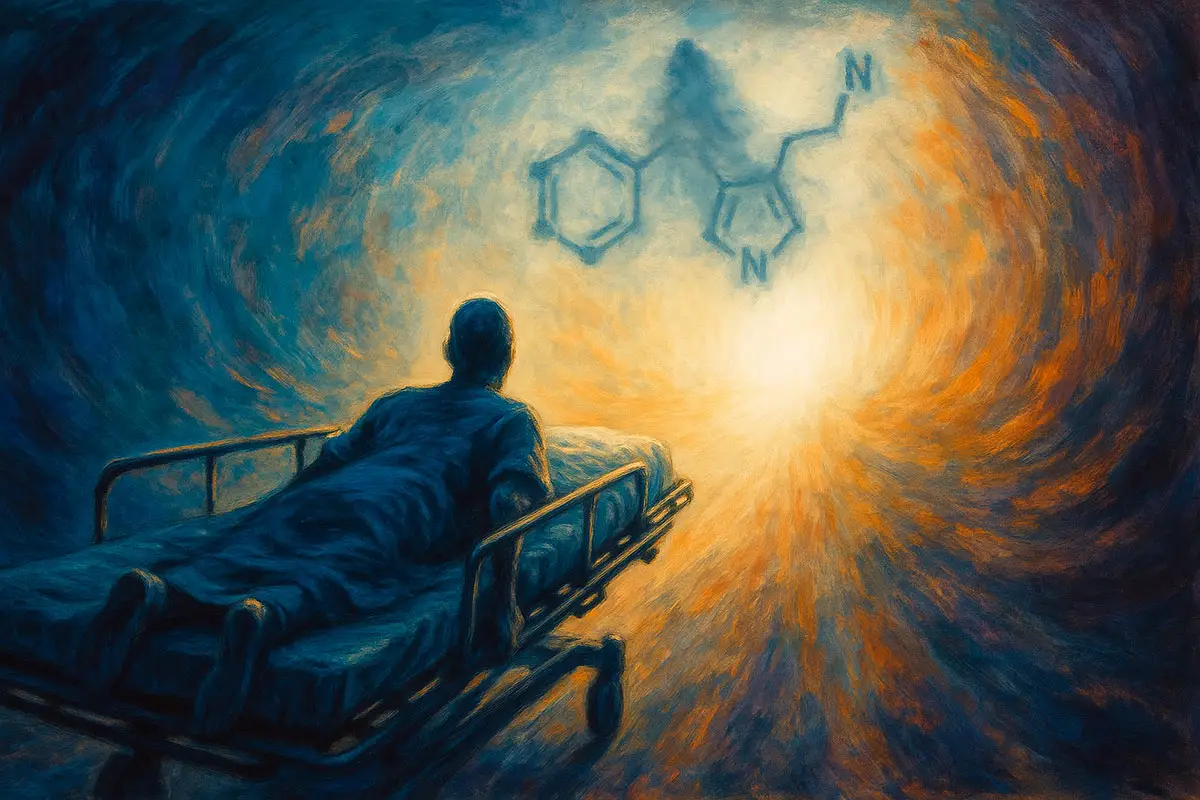
Many of these facilitators lack medical or psychological training, or even a basic understanding of the risks associated with non-ordinary states of consciousness. Without prior screening, without clinical interviews, without clear intervention protocols, people with histories of psychosis, bipolar disorder, complex trauma, or incompatible medication are exposed to high-intensity experiences that can trigger serious crises.
When something goes wrong—and it goes wrong more often than is publicly acknowledged—the narrative shifts. The harm is attributed to the “process”, to “ego resistance”, or to the idea that the person “was not ready”. Never to the facilitator, never to the context, never to the absence of clear boundaries. This systematic externalization of responsibility is one of the most troubling features of this ecosystem.
Neo-shamanism as empty aesthetics
Much of this phenomenon rests on a display-case version of neo-shamanism: feathers, poorly learned chants, indigenous words stripped of context, and a narrative that blends Amazonian traditions, handbook Buddhism, and supermarket positive psychology. There is no lineage, no community, no real transmission of knowledge. There is, however, a carefully curated staging and a constant obsession with documenting everything on social media.
The ceremony ceases to be an intimate and safe space and becomes content. Inner experience is subordinated to the photo, the video, the inspirational testimonial that will be used to attract the next clients. The psychedelic journey—which demands silence, care, and humility—is turned into a personal marketing tool.
Profiting from vulnerability
The most ethically questionable element is the economic model underlying many of these offerings. Inflated prices, “premium” packages, luxury retreats sold as transformative experiences—all of it aimed at people who are often going through moments of emotional vulnerability, grief, or life crisis.
This is not an economy of care, but an economy of promise: promises of rapid healing, spiritual awakening, deep solutions without process or subsequent integration. When the experience fails to meet those expectations—as often happens—silence replaces support. There is no follow-up, no long-term responsibility, no accountability.
A call for responsibility and rigor
Criticizing this phenomenon is not an attack on psychedelic substances or on their therapeutic or spiritual potential. On the contrary, it is a defense of their responsible, ethical, and contextualized use. It requires acknowledging that working with the human psyche involves limits, ongoing training, and a profound ethic of care.
In contrast to the Instagram guru and the improvised facilitator, there is an urgent need for clear criteria, transparency, verifiable training, and above all, humility. Not everyone is qualified to hold these spaces. Not everything goes. And not everything ancestral is automatically benign when it is torn from its context and turned into a business.
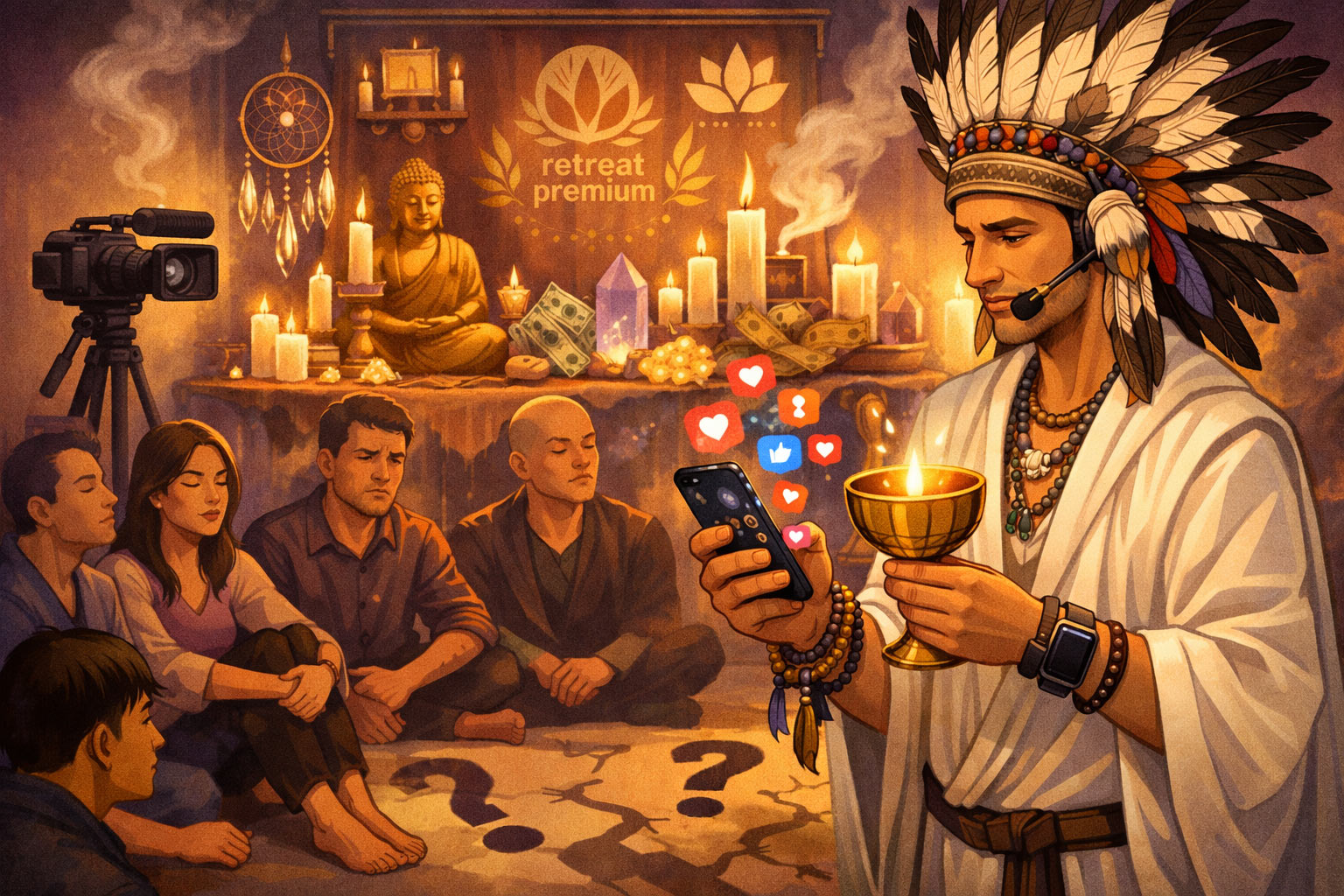
The underlying pattern is well known and deserves to be named plainly: the psychedelic world is full of the “enlightened”, of improvised gurus who, after having lived an intense experience—“touched by the spirit of the plant”, in their own narrative—feel automatically legitimized to guide others through processes they do not deeply understand. Personal experience becomes a credential, and subjective intensity replaces learning, supervision, and ethics.
Spiritual ego and lack of humility operate here as structural risk factors: they not only endanger those who facilitate, but also drag down the people they accompany. In contexts where the human psyche is at stake, confusing personal revelation with competence is a silent—but profoundly harmful—form of irresponsibility.
Because when spirituality becomes a product and consciousness a commodity, the damage is no longer symbolic. It is real, measurable, and, in far too many cases, avoidable.

Raúl del Pino is a prominent psychonaut, writer, and authority on psychoactive substances, particularly psychedelics.
He founded www.psiconautica.org in 1996, the first Spanish-language website dedicated to drugs, focusing on Altered States of Consciousness and Transpersonal Psychology. He is the author of the books Contemporary Guide to the Psychedelic Journey and MDMA, Sex, and Tantra. Raúl combines scientific rigor with personal introspection, exploring the relationship between psychoactives, sexuality, and spiritual practices. His work makes a significant contribution to the understanding and responsible use of psychoactive substances.